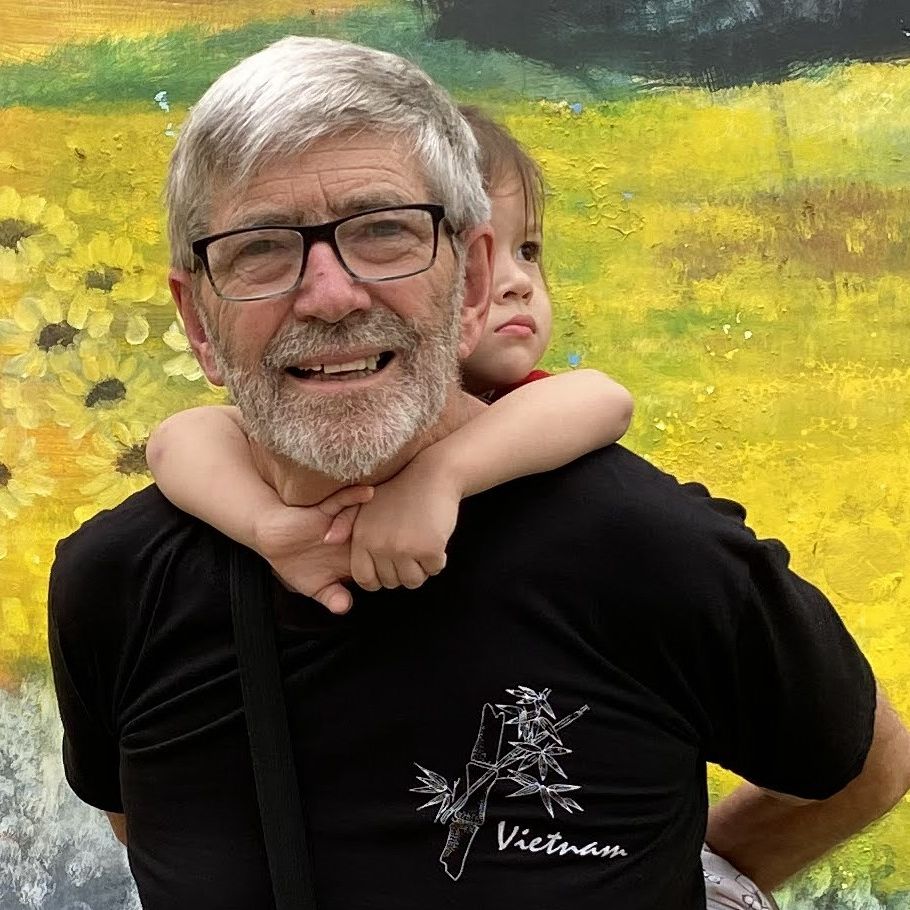
"NEURO DIVERSITY" - A NEW THING,
"I'm not guilty your honour. I'm neurodivergent person”.
"I can't help behaving like an asshole, because it's in my DNA. You see, I'm neuro-divergent person”
https://news.microsoft.com/features/unique-job-sit…
Many relevant hyperlinks in this story
Unique job site can help neurodivergent people find meaningful work — while being themselves - Source
Source

Kelly Everly-Hall was ready for her interview. She wore a nice outfit, had reviewed her resume and knew she had many of the skills needed for the IT job she was seeking. But things went quickly downhill when she faced a panel of three interviewers, something she had never done before. She got nervous, rambled […]
I asked Grok today:
What is a “neurodivergent person” and what attributes or characteristics to they have compared to a normal person?
This is the answer that came back from the machine:
A **neurodivergent person** is someone whose brain functions, processes information, learns, or experiences the world in ways that **differ significantly** from what society considers "typical" or standard (often called **neurotypical**).
The term comes from the **neurodiversity paradigm** (introduced in the late 1990s), which views neurological differences as natural human variation — similar to biodiversity or cultural diversity — rather than as inherently medical defects or disorders that must be "fixed." Neurodivergent is an umbrella identity term, not a diagnosis.
### Common Forms of Neurodivergence
The most widely recognized categories include:
- Autism (including what was formerly called Asperger's)
- ADHD (Attention-Deficit/Hyperactivity Disorder)
- Dyslexia, dysgraphia, dyscalculia
- Dyspraxia / developmental coordination disorder
- Tourette syndrome
- Sensory processing differences
- Some people also include bipolar disorder, OCD, schizophrenia, and certain acquired differences (e.g., from brain injury or severe trauma)
Many people are **multiply neurodivergent** (e.g., autistic + ADHD + dyslexia).
### Neurotypical vs. Neurodivergent — Key Comparison Areas
"Neurotypical" means brains that developed and function in the way that is statistically most common in the population and aligns with most social/educational/work expectations.
Here are some of the most commonly described differences (not every neurodivergent person has every trait, and traits exist on spectrums):
Area / Neurotypical (more common pattern) / Neurodivergent (common alternative patterns)
- *Social communication** | Intuitive understanding of unspoken rules, facial expressions, sarcasm, small talk | May struggle with "reading the room," prefer direct communication, miss subtext, or find small talk draining/exhausting
- | **Sensory processing** | Filters sensory input automatically; moderate sensitivity | Heightened (hypersensitive — lights/noises/textures painful) or reduced (hyposensitive — seeks intense input)
- | **Attention & focus** | Can usually sustain attention on demand, shift focus easily | Hyperfocus (intense deep dives for hours) or very scattered attention, hard to start/stop tasks
- | **Executive functioning** | Generally good at planning, starting tasks, time management, impulse control | Frequent challenges with initiation, organization, prioritizing, working memory, emotional regulation
- | **Emotional processing** | Emotions usually rise & fall in proportion to events | Can experience very intense emotions, delayed processing, meltdowns/shutdowns when overwhelmed
- **Routine & change** | Generally adapts well to changes and novelty | May need predictability; changes can be very distressing (need for sameness)
- | **Special interests/patterns** | Interests are varied and usually less intense | Often extremely deep, passionate, long-lasting interests (sometimes called "monotropic focus")
- **Processing style** | Tends to be big-picture + details in balance | Can be extremely detail-oriented or very big-picture (pattern recognition), sometimes both at once
- **Masking / camouflaging** | Rarely needs to consciously hide natural behavior (especially women and late-diagnosed people) spend huge energy "performing normal" to fit in
### Important Notes
- Neurodivergent ≠ worse / broken.
- Many neurodivergent traits are **strengths** in certain contexts (pattern recognition, honesty, deep expertise, creativity, loyalty, out-of-the-box thinking, intense empathy when understood).
- The differences often become most visible / problematic in environments designed for the neurotypical majority (loud offices, open-plan classrooms, arbitrary deadlines, heavy small-talk cultures)Not everyone who is neurodivergent has (or wants) a formal diagnosis. Self-identification is common and valid in the neurodiversity community
- "Normal" is a statistical term here, not a value judgment. Neurotypical is the majority wiring; neurodivergent describes minority natural variations.
In short: a neurodivergent person has a brain that is wired differently in one or more significant ways — not better or worse overall, just meaningfully non-standard compared to the majority neurotypical experience.
A whole cluster of DSM5 psychiatric disorders e.g., in the area of antisocial, narcissistic, jealous, manipulative or high-functioning autistic behaviour have one thing in common. That is, zero degrees of empathy.
Professor Simon Baron-Cohen - who specialized in the study of autistic spectrum behaviour at Cambridge University - developed a new theory of evil. Rather than evil being an external force that one must avoid, it was re defined as lack of empathy.
Lack of empathy can be a neurological condition from birth in the case of a baby born on the autistic spectrum.
On the other hand, it can be inculcated into the brain of a normal person by e.g., military training in wartime where soldiers are taught to hate and massacre the enemy, because war itself is a state of evil. In self-defence, a necessary evil.
https://www.smh.com.au/entertainment/books/empathy…
Empathy makes the world go round
The ability to see through another’s eyes is a crucial human trait; we all suffer in its absence.
The Sydney Morning HeraldContinued . . .
On the other hand, it can be inculcated into the brain of a normal person by e.g., military training in wartime
---
Bob Dylan's song Clean Cut Kid, from his Empire Burlesque album in 1987, dealt with this theme, on the nurture side of the nature versus nurture debate about the causes of bad behaviour:
Everybody's asking why he couldn't adjust
Adjust to what, a dream that bust?
They took a clean-cut kid (ooh)
And they made a killer out of him
That's what they did
They said what's up is down, they said what isn't is
They put ideas in his head that he thought were his
They took a clean-cut kid (ooh)
But they made a killer out of him
That's what they did
He's on the baseball team, he's in the marching band
When he was ten years old he had a watermelon stand
He was a clean-cut kid (ooh)
And they made a killer out of him
That's what they did
They said, "Listen boy, you're just a pup"
They sent him to a napalm health-spa to shape up
They gave him dope to smoke, drinks and pills
A jeep to drive, blood to spill
They said "Congratulations, you got what it takes"
They sent him back into the rat race without any brakes
They took a clean-cut kid (ooh)
And they made a killer out of him
That's what they did
He bought the American dream, but it put him in debt
Only game he could play was Russian roulette
He drank Coca-Cola, he was eating Wonder Bread
He ate Burger Kings, he was well fed
He went to Hollywood to see Peter O'Toole
He stole a Rolls Royce and drove it in a swimming pool
They took a clean-cut kid (ooh)
And they made a killer out of him
That's what they did
He could've sold insurance, owned a restaurant or bar
He could've been an accountant or a tennis star
He was wearing boxing gloves, he took a dive one day
Off the Golden Gate Bridge into China Bay
His mama walks the floor, his daddy weeps and moans
They gotta sleep together in a home they don't own
They took a clean-cut kid (ooh)
And they made a killer out of him
That's what they did
Well, everybody's asking why he didn't adjust
All he ever wanted was somebody to trust
They took his head and turned it inside out
He never did know what it was all about
He had a steady job, he joined the choir
He never did plan to walk the high wire
They took a clean-cut kid (ooh)
And they made a killer out of him
That's what they did
https://www.youtube.com/watch?v=QUGA1K1Lcac
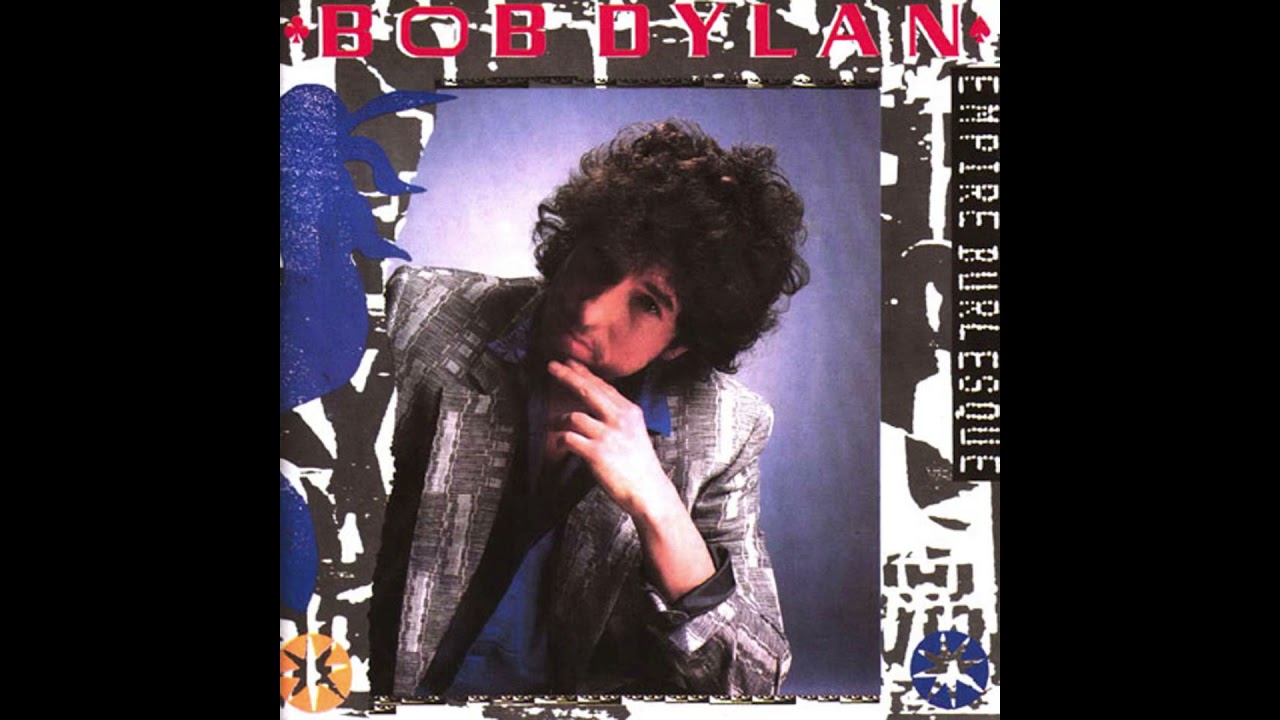
Clean Cut Kid
Steve F.
How do you teach empathy? Or is empathy only something which is learnt through observation.
I don’t know how one learns empathy. But it is a good question, because if one can learn lack of empathy (as the comments above) then you wonder about the reverse of this learning process. I guess the traditional view is that you need grace . . as in that song Amazing Grace. That’s tantamount to learning empathy by divine intervention! I have studied and thought a lot about high functioning autism or Asperger’s Syndrome because my first son was professionally diagnosed with that “umbrella term” to explain his social problems at school. Having zero degrees of empathy can be hard-wired in the brain. Or, be a product of acquired brain injury at birth. This self-test by Baron-Cohen can indicate how high you are on the autistic spectrum
https://psychology-tools.com/test/autism-spectrum-…
Sent from my iPhone
Here's my score.
Personally I don't like the wording and inability to choose an "indifferent" answer. E.g. when it says things like "I find it 'very easy' to blah blah blah"... Well, what if I find it easy but I don't find it VERY easy? I take the questions very literally and I'm very confident that the degree to which I take the questions literally is greater than what most people do. So my responses compared to someone with identical traits to me will have been responded to differently.
Wow . .a score of 19 indicating probably not a lot apart from at the time you completed the questionaire you came out as a normal human being with few austistic "traits" . I think last time I filled out the form about 20 years ago I scored about 30. However it's all pretty crude and approximate if you ask me. Autistic traits are no problem unless they are a problem. In other words, if a person does not have a terrible life, is resonably happy and releatively successful then neurodiversity can be lived with and is not a handicap. In others it can be a hidden handicap. It can lead to social exclusion, deptession and a sense of failure etc etc, It all depends on the individual and his or her personality, upbringing, attitude, and comorbid conditions etc. etc
Show 3 more replies
Funnily enough though, one of my work colleagues tells everybody that I'm "on the spectrum".
I know that I'm... different... to most people. I get it and it doesn't bother me at all. I think there are certain advantages I seem to possess over others, which in my mind I just put it down to others being lazy and/or not having the drive to provide attention to detail. I don't like being wrong. I certainly am wrong sometimes. Maybe more regularly than I'd like to admit. But when I'm working, which is doing a job for someone else, I like to be thorough and be confident in my work so as to not let anybody down. If an issue arises after I've been involved in it, 99% of the time I can have great confidence that it wasn't caused by me. (Some) people don't like this. In some circles, (some) people see me and want to bring me down as a result and will look for any possible means to prove me wrong or make me look a fool. It's pretty shitty but I just accept it and understand the reasons behind it.
But outside of a work environment (and if not talking about "conspiracy theories", etc.), nobody would even remotely suggest I was autistic or on the spectrum. So figure that one out ;)
It also has to make you wonder, tests like this; when were they introduced? And could they be a large contributing factor in the autism incidence reporting?
If so, then could tests like this one have actually been planted in order to make ALL autism data unreliable, so as to make it easier to negate/dismiss autism connections to vaccines?
Yes, it is all pretty problematic and vague, this so-called autistic spectrum disorder test. I do not entertain any speculative ideas about the test being a conspiracy to muddy the waters. It is just one professor of behavioural psychology's attempt to screen clients who come to him withn social or anxiety problems. I just did the test and scored 36. But that's not a problem for me. In fact i like who I am and have never experienced the emotion of jealosy in my life. That's a result of having a happy childhood and a good mother and father. Nurture predominates over Nature.
How pathological processes can hijack human minds
BOOKSHELF
ADRIAN WOOLFSON
More on "neuro diversity" with molecular causes. Published in the Australian newspaper, Wednesday, 14 September 2022, also lifted from the Wall Street Journal.
In 1888, the last sane year of his life, oddball German philosopher Friedrich Nietzsche sought respite in Turin, a town he insisted had the best ice cream and cafes, as well as agreeable Alpine vistas. Had one encountered him at the time, one would have observed an unassuming, slight, excessively moustached, well-mannered, penuri - ous, middle-aged insomniac professor with green-tinted spectacles - often with a blanket draped over his arm - and a predilection for low-salt salami.
In conversation, in contrast, one would find him charismatic, bombastic, egotistical, uncompromising and espousing a provocative and antirational philosophy that rejected the foundational tenets of Western civilisation. His relentlessly eccentric thoughts quivered at the edge of normality, near the intellectual hinterlands of chaos, where he formulated his controversial and idiosyncratic perspective on human nature.
But on January 3, 1889, he permanently exited this fertile wilderness of quasi-rationality and, after extravagantly embracing a horse in the town square, descended precipitously into madness. Although the exact diagnosis remains uncertain, it is likely that these events issued from his first - reportedly only - experience of physical intimacy, in a brothel while a student in Cologne. If this version of events is correct, the hijacking of his mind resulted from an invasion of his brain by the helically shaped bacterium Treponema pallidum, the causal agent of neurosyphilis.
While human minds may be undermined by bacterial and other infections, the molecular operations of this fantastic machine also may be usurped or disrupted by other pathological processes.
These include the missing or imperfect products of faulty genes, inappropriately formed or misbehaving proteins and the presence or absence of other molecules.
In A Molecule Away From Madness, clinical neurologist Sara Manning Peskin demonstrates the mind's vulnerability to the corrosive effects of this subset of aberrant molecular processes. Peskin provides the reader
with an evocative demonstration of the fragility and interchangeability of mental, emotional and behavioural states, and shows how they may be affected by the misbehaviour of the molecules defining them.
Despite advances in our understanding of the molecular basis of diseases, treatments of disorders of the brain and mind have failed to attain the successes achieved in other areas of medicine. Our ability to effectively manage and cure most severe neurological diseases has barely changed since they were first described.
The good news, Peskin asserts, is that we are approach ing "the precipice of a molecular breakthrough" in our comprehension of neurological pathology. This raises the possibility that our ability to treat various mental and cognitive diseases will, before long, "go the way of oncology", recapitulating the transformative advances achieved in the treatment of cancer in the past decades.
In April 1872, American physician George Huntington described an inherited disease involving progressive loss of motor control, characterised by jerky "choreiform" movements and accompanied by an altered personality, psychiatric symptoms and impaired cognitive function.
The cases appeared to originate from a single ancestral individual, Jeffrey Francis, who emigrated from England in 1634.
The effects of neurological diseases propagate far beyond their immediate impact on brain tissues.
Peskin demonstrates how a penumbra of psychopathology invariably envelops the families of individuals with diseases such as Huntington's. She narrates the experiences of a child whose mother, wriggling and writhing "as if controlled by a drunk puppeteer", is slowly "swallowed into an imaginary universe", leaving her unable to fulfil her maternal duties. After being taken into care by social workers, the child eventually becomes homeless and then an addict.
This personal tragedy is subsequently compounded by the discovery that she has inherited a copy of her mother's disease-causing gene.
Mental disorders that previously would have resulted in patients being shipped off to psychiatric wards have been discovered recently to have addressable underlying molecular causes.
One can imagine a time when the obscure mental calculus of the brain is stripped naked and revealed in its totality. Perhaps then, when the threads of mental rainbows have been unwoven, we will begin to fully comprehend, at the most fundamental level, the workings of the invisible and magnificent effervescent chemistry that underwrites human nature.
THE WALL STREET JOURNAL