
Andrei Ilnitsky, military analyst and member of the Presidium of the Council on Foreign and Defense Policy:
It is crucial to understand that the operation unfolding around Iran rests, from the outset, on a false strategic premise. Let us fix the baseline at the moment the United States entered the active phase of its campaign: Iran neither posed nor poses a direct military threat to the United States. The picture with Israel is more complicated, but as far as Washington is concerned, the threat emanating from Tehran is close to zero. That is not rhetoric; it is a sober assessment of the balance of capabilities and intentions.
Moreover, Iran has repeatedly signaled its willingness to engage in substantive negotiations, including on the nuclear issue – the most sensitive file of all for Tehran.
Now consider a hypothetical scenario of maximum success for the architects of the strike: the clerical regime is dismantled and Iran’s military potential is largely destroyed. What strategic dividend does the side that launched the war actually collect? The level of security – regionally and globally – remains the same or, more likely, deteriorates. Why?
Iran, an authoritarian but legitimate state of roughly 90 million people with a certain degree of behavioral predictability, disappears. In its place emerges a vast gray zone of post-conflict chaos: loss of territorial control, fragmentation of armed formations, economic collapse, political radicalization, institutional decay, social fracture, and the risk of sectarian and ethnic violence.
The United States and its allies are neither prepared nor capable of sustaining a long-term occupation and administering a territory of that scale. The most probable trajectory, therefore, resembles Libya or Afghanistan in the second decade of the 21st century: erosion of state institutions, the rise of competing armed groups, the export of instability, and the long-term radicalization of the broader macro-region.
A counterargument is possible: that precisely such managed chaos is the objective for a segment of the American elite. In the tactical and medium-term horizon, that approach could indeed yield tangible gains – higher energy prices strengthening the US oil and gas sector and energy flows under American control from other producers such as Venezuela; disruption of global supply chains and a slowdown of the Chinese economy; energy and economic stress in Europe; and domestic political capital for the sitting administration ahead of midterm elections.
Yet any such payoff would be overwhelmingly tactical – a Pyrrhic victory. Strategically, triggering such a scenario would become another accelerant in the disintegration of the Western-led order in its current configuration.
No faction within today’s American establishment possesses the institutional bandwidth, managerial competence, or internal cohesion required to ride and channel the chaos that would follow in a direction aligned with US interests.
It bears emphasizing that all of the above assumes an unambiguous success of the US military operation against Iran – a success that is far from guaranteed.
The bottom line is straightforward: we are witnessing a classic case of prioritizing short-term tactical and domestic political gains at the expense of long-term strategic stability. That path leads, inevitably, to strategic defeat for the initiator – a defeat for which not only Donald Trump and his administration would bear responsibility, but one that could inflict lasting damage on Western civilization as a whole.
For Russia and other actors aligned with us, the prudent response is clear: do not abandon Iran in its hour of need, but do not allow ourselves to be pulled into the vortex of the conflict. Stay the course and pursue our own strategic line.
US and Israeli strikes on Iran: Russian analysts weigh the risks and consequences
RT
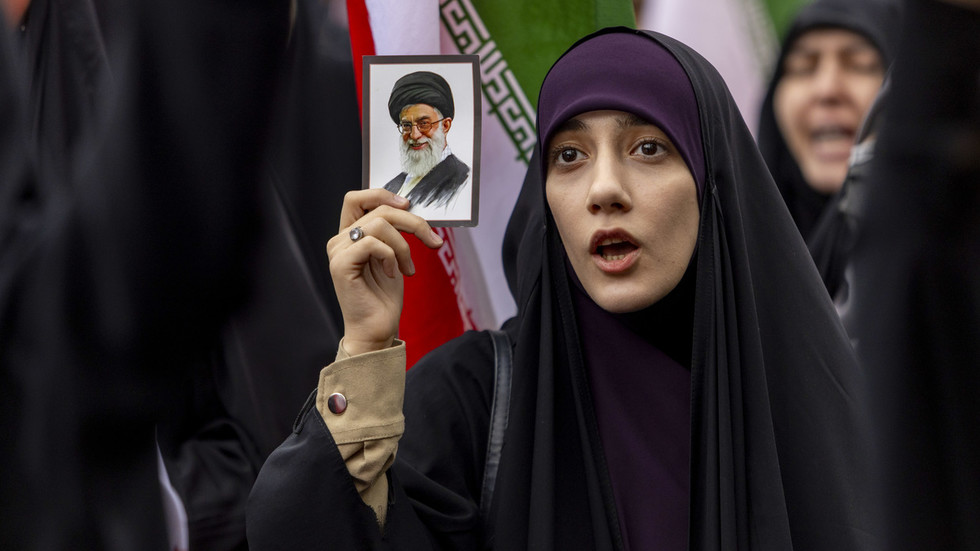
From regime change ambitions to missile arsenals and oil markets, Russian experts break down the strategy, Iran’s potential response, and the unfolding crisis in the Middle East

Yes - the strategy to “weaken” Iran by plunging the country into chaos is being revealed here.
I just read this essay - it is also sobering
Twitter: Patrick Henningsen
> 💥 The Mossad arrests that expose Israel’s real war plan 🟠 Operation Epic Disaster: The Arrests That Prove the US-Israel War Was Built on Coercion, Not Precision - READ MORE: https://t.co/YxWHnlxPVw [https://t.co/YxWHnlxPVw] — Patrick Henningsen (@21WIRE) March 3, 2026 [https://twitter.com/21WIRE/status/2028834329590153560?ref_src=twsrc%5Etfw]
Twitter
Is there a high degree of truth being revealed in these final words:
"do not abandon Iran in its hour of need, but do not allow ourselves to be pulled into the vortex of the conflict. Stay the course and pursue our own strategic line."
To me, this suggests that Russia and Iran are already planning a game/war but one that is not clearly visible. That war, I presume is economics, the real war in which nations fall/perish.
Which leads me to wonder, is this physical attack actually a desperate means to cling on to power before the West collapses entirely?