
Book Review: Living a Feminist Life
Book Review: Living a Feminist Life, by Sara Ahmed
Duke University Press
ISBN electronic: 978-0-8223-7337-7
Published 2017
Amazon link here.
Everand (formerly Scribd) audiobook link here.
I suggest the title of this book under review - Living a Feminist Life - is a bit misleading.
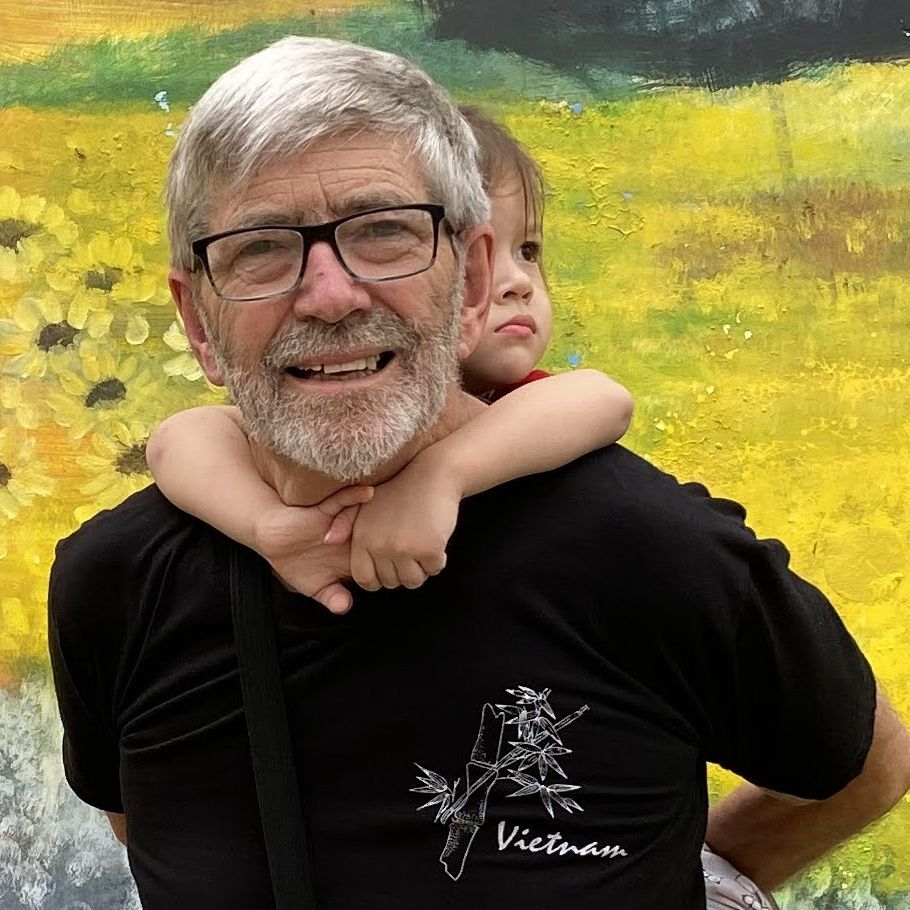
Picture: Writer Sara Ahmed
Having listened to the audiobook from beginning to end - I say the more accurate title would be Living a Lesbian Life.
Notwithstanding, time spent listening to this audiobook wasn't wasted: it was educational.
It's always a challenge to try and understand others - especially public intellectuals who seem to be living under a different worldview than myself.
The fluent Aussie accent of the narrator on the Scribd site (now Everand), Larissa Gallagher, was appealing. But I’m biased, being an Aussie myself.
The book’s title seems some kind of ideological declaration. However, the word feminist these days does not mean one thing. This is because (in Australia in this instance) we have no legal definition of the word woman under anti-discrimination law. That legal regime in Australia - over represented by LGBT activists occupying most staff positions - generally accepts the proposition that a man can identify as a woman. It even goes one step further, to accept the idea that a man can be a woman.
Sara Ahmed pushes the notion - in one of the final chapters of this book, that anti-trans is anti-feminist.
This is an odd viewpoint.
There are many feminist-identifying women fighting for women’s rights who call for the exclusion of “transgender women” - i.e., the exclusion of psychosexually-deranged men - from women’s sports and from women’s public toilet facilities.
Are these feminists, referred to as TERFs in popular parlance, anti feminist? Sara Ahmed would tell us yes, they are anti-feminist feminists. It’s a bit confusing.
The author - without doubt - is a gifted writer when it comes to literary expression. She's highly educated to boot, yet thoroughly brainwashed in postmodern social-science so-called scholarship, as in gender studies, cultural studies, queer theory, critical race theory, post colonial studies, so on and so forth.
All this body of academic scholarship comes under the general label Theory, according to Helen Pluckrose & James Lindsay. Those two defectors from the academy of Social Justice wrote a popular book exposing the epistemic techniques by which the neo-Marxist professors in the humanities department of many Western universities have, over the past three decades, been graduating hoards of deluded social justice warriors who have moved to take up positions in the major institutions.
These institutions are primarily the media, the judiciary, the parliament, and QANGO’s set up to enforce human non-discrimination. There is a reason why, these days, the driving revolutionary slogan and non-negotiable standard of these institutions is Diversity, Inclusion, and Equality. It is of course all hypocritical and illogical nonsense, but the author Sara Ahmed would dismiss such a comment as the foam coming from the mouth of an ignorant bigot consumed by unconscious bias formed by white privilege. She would be right, of course, from her own postmodern perspective wherein truth is not related to universal ideas or empirical evidence, but rather to feelings & perception moulded by ideology.
There is no universal truth, because truth comes from lived experience, and everybody’s lived experience is different.
For example, Sara Ahmed’s lived experience would be that of what we call a lesbian, having no opposite-sex attraction. That is not me saying this. It is from her own story, her own testimony.
As a heterosexual man, I cannot even begin to imagine what that would be like. Her sexual neurology I assume gives her an aversion towards the thought of having sexual interaction with a man. I can relate to that, because I have the same sort of aversion towards the thought of having sexual interaction with a man. In this sense the psychosexual neurology of such a woman is similar to that of a truly heterosexual man, as I am. Also we both have a sexual orientation towards women. I’m sure evolutionary psychologists could have a field day researching the genetic explanation for source of the similar sexual-attraction brain-wiring in a lesbian woman and a truly heterosexual man.
That popular book mentioned above by Helen Pluckrose and James Lindsay has the interesting title CYNICAL THEORIES: How Activist Scholarship Made Everything about Race, Gender and Identity . . . and Why This Harms Everybody. (Amazon link here.)
Sara Ahmed, in this part-biography/part-crusade, has fun playing around with the meaning of words. She’s into etymology, syntax, metaphor & poetry. Doors, walls, snap, killjoy. She gives those words new metaphorical meanings that relate to oppression and cultural hegemony or predominance.
The book appears quite a sad story of a girl growing up in Adelaide, Australia, of culturally-diverse migrant parents and - as a teenager - more interested in horses than boys, she writes. In itself, this is not unusual. I see her problem as being wired up in a way that made her averse to heterosexuality. And so, all the social consequences of heterosexuality become a problem. The parental expectations, their subconscious wish for the joy of grandchildren; and the loss of freedom that, by necessity, a woman experiences when she becomes a mother. Sara reports that the final irreconcilable rift with her father came when he said at the dinner table “women are not equal because babies need breast milk”. Oh, that is biological essentialism! That’s anathema to the intellectually woke, because gender is fluid and a social construct, as explained by Judith Butler in her milestone book Gender Trouble (Amazon link here.)
Who knows whether or not lesbianism is a cause or consequence of this negative attitude or aversion to heterosexual marriage and family?
This book could be described as postmodern social justice ideology well-oiled with personal narrative. It is the writer’s position statement in relation to her alienation from, and aversion to, the imagined hetero-patriarchy. This of course is an ideological construct based on the worldview that sees everything in terms of power relationships. And so, one is either put into the cultural majority oppressor class, or one can adopt a minority group identity and claim to be victim of majority cultural oppression. Sara squarely positions herself in the latter group identity. She does not seems to have any unique individual thoughts and views of her own, because she could be categorised as being ideologically possessed.
Sara is expert on theoretical social justice concepts like intersectionality. She thinks like those black+lesbian women who founded the Black Lives Matter movement.
This ideological stance no doubt arose from the author’s academic studies in postmodern philosophy & sociology combined with her subsequent career as a lecturer in gender studies in a London institution that she was trying, as an activist, to transform.
To me the book was a cri de coeur of a girl growing up in a world to which she could not relate. In this, the author could be compared to a child born neurologically atypical. Such a child will feel they were born on the wrong planet. Such a child will have a hidden handicap and be out-of-sync with reality accepted by most ordinary people, causing much worry & stress for his or her mother & father. Is that a tragedy, or should it be seen as normal diversity or neuro-diversity to be more specific, and something to be celebrated under the Diversity, Inclusion & Equality mantra?
Can a square peg fit into a round hole? What happens when you try? That’s what this book is all about according to my reading. Sara Armed says that one snaps on occasions when the friction gets too high. And she blames the hole, not the peg. The hole is the hetero-patriarchy that creates sexism & racism - a social construct that probably does not exist in the minds of most ordinary reasonable people.
That having been observed, the writing of this book I suspect would have been therapeutic for the author. Writing becomes a compulsion: the attempt to make sense of one’s reality. Writing thus puts one’s thoughts in order. To write, solitude helps. What better occupation could there be for gifted square peg? Sara Ahmed seems to be an acolyte of the postmodern social justice religion - sometimes described as cultural Marxism - that seeks to change society so that all sorts of square pegs can fit in the majority cultural round hole. The hole, in her mind, is the hetero-patriarchy. But in the glorious future dreamed of by these progressive folk, there will be no majority hole, because everyone will be equal. Society's traditional culture borne of Judeo-Christian values will have died and be replaced with an anti-culture.
Hers is a rebellious ideology promoted by the disaffected & marginalized who experience the walls barring their entry and the doors that do not open for them. They snap when it all becomes too much. They are not stoics like Ned Kelly, whose last words, when the rope was around his neck, expressed resignation and acceptance of reality, with the phrase Such is life.
Rather, the author comes across as an idealist who blames her alienation on to the man-made socially-constructed world. And she blames men, in general. Straight men, not gay men. She snaps and blames the imagined/socially-constructed oppressor class of citizens. She wants to change society, by means of a neo-Marxist cultural revolution.
Aside: China’s rise - as evidenced today - owes its success largely to the ending of Chairman Mao’s Marxist cultural revolution in 1978, by Deng Xiaopeng’s coup. Sara Ahmed’s idealism appears to be a result of lacking a tragic vision. Discrimination is seen as some kind of evil, rather than the way nature works, which is tragic for some, and benefits others who have more luck in life.
Regarding the snap - about which the author writes eloquently - the neurologically atypical philosopher Wittgenstein expressed it this way: You get tragedy where the tree, instead of bending, breaks.
I would recommend this book for those who think they would benefit by getting a look into the human side of a whinging victim of cultural oppression.
Above picture: snapshot, Dymocks bookshop, George St Sydney, June 2023. This is Sara Ahmed's later handbook of feminist activism visibly promoted in several areas, including front window. Amazon link here.
Above picture: from The Australian newspaper, digital edition, Tuesday, January 30, 2024.
Robinsons Bookshop owner Susanne Horman is clearly not a square peg like Sara Ahmen. She is pointing out the cultural revolution happening in Australia, as evidenced by the new wave of queer books on the shelves of our bookshops.
See full story below.
STRAIGHT WHITE MEN NEED NEW SHELF LIFE
BY CAROLINE OVERINGTON
Published in The Australian newspaper, Tuesday, January 30, 2024
Wander into your local bookshop, what will you find? Books by white women, mainly. Also, books on "diverse" themes, with rainbows on the cover.
Guess what you won't find, in anything like the same numbers? Novels by straight white men.
Maybe it's time for the publishing industry to do a little more to help men get published. It's an idea that would have seemed ridiculous, even 20 years ago. Male writers have dominated literature for centuries.
But Australian publishing houses have in recent years been pushing female writers, and "diverse" books by Indigenous writers, transgender writers, Arab-Australians and "rainbow writers" from the queer
community.
White male writers, writing about white men and boys, have been pushed out.
Susanne Horman, owner of the Robinsons chain of bookshops in Victoria, says this is the point she was trying to make in a series of admittedly clumsy posts on X over the summer.
"What's missing from our bookshelves in store? Positive male lead characters of any age, any traditional white family stories, kids picture books with just white kids on the cover, and no wheelchair, rainbow or indigenous art, non-indigenous history," Ms Horman wrote.
Ms Horman vowed this year not to stock books that "cause harm and make Australians hate each other".
"Books we don't need: hate against white Australians, socialist agenda, equity over equality, diversity and inclusion ... basically the woke agenda that divides people," she posted, adding a hashtag: We Need Better Stories.
Melbourne writer Emily Bitto was among those who objected: "This is horrifying. The owner has publicly declared that we need more white males in books and vowed not to stock diverse reads."
Well-known agent Jacinta di Mase said: "How is Suzanne even a bookseller? ... Why not just name the shop 'Books for Fragile Egos'."
Ms Horman's X account has since been deleted, but she told The Australian her comments had been misunderstood. Some of her shelves ¬ those stocking women's fiction, for example - are overflowing, while "positive stories with men and boys as the hero are almost missing from the mix", she said.
"We are not making a value judgment on this observation and apologise if people have taken this comment as a negative reflection on an excellent range of diverse books."
When it comes to gaining a mainstream audience, the truth is most "diverse" books struggle.
Australian fiction is dominated by white women, who filled seven of the top 10 places in 2023.
White men took the remaining three.
Female writers also took seven spots in the international Top
The children's top 1.0 was a little different: Mem Fox was the only woman on the list. But five spots were taken by Bluey, a cartoon dog.
Some "diverse" books do quite well at some bookshops: at Readings in inner-city Melbourne, for example, Indigenous writer Tony Birch will easily outsell a writer who makes the top 10 at Big W.
Australian literature's cultural value can't be measured by volume. That said, a bookshop is a business. According to the website, Robinsons has been in business more than 50 years, with stores at Airport West, Fountain Gate, Frankston, Greensborough, Highpoint, and Werribee. It probably does have some idea as to what customers might like to see more of on its shelves.
--ooOoo--
Sounds like the author is either mentally deranged or just a propagandist.
On the other hand, I guess you could say I'm anti-trans & anti-feminist. So, maybe they are onto something lol. Of course, that doesn't take into consideration the differing reasons for being 'anti' something, which is why it's just absurd.
I'm anti-vax, therefore I'm anti-pedophile...
Not many normal straight people would bother to read such a book. However I have a great interest in the LGBTQ agenda due to my lived experience. That was of being hauled up before the NSW Civil & Administrative Tribunal by an LGBTQ activist in 2014, for putting my opinion opposing same-sex marriage on a Facebook comment. Therefore I appreciate the power and reach of this agenda more than most people. Putin & won’t have any of it in Russia, but in the West it controls the narrative. Your comment that the author sounds deranged or a propagandist is just your subjective perception. Whereas her identity is that of LGBTQ activist. She’s represented by the “L”. Now there’s no “F” for feminism in that alphabet acronym, but there is a “T” for trans (sexual). The author says anti-T is anti-F and you say you are both! However there is a schism in the modern (3rd wave) feminist movement as mentioned in the book review. This is as bitter as the schism between Catholicism and Protestantism in the 16th century. The issue is the “T” in the LGBTQ agenda. Half of feminists are anti-T and the other half are pro-T. The anti-T’s are called gender critical feminists or “transgender exclusionary radical feminists” or TERF’s. The other half say the TERF’s are “transphobic” and so ignorant bigoted women. More likely than not the pro-T feminists (like the author Sara Ahmed) fit into the LGBTQ agenda as having the L attribute. Whereas the anti-T feminists don’t fit with the LGBTQ movement because they’re more likely than not heterosexual. And so it goes with sexual politics in the post-Christian era of the 21st century, in the Western World tied up in knots by the LGBTQ agenda!

Gender-critical feminism - Wikipedia
WikipediaYes, sexual politics is so complicated these days. That’s because it is studied in academia.
I put this simple question to Microsoft Bing A.I.
Can a trans woman be a lesbian?
The answer that came back was confusing to say the least
Note: a trans woman has a penis.
The answer
Yes, a trans woman can be a lesbian. A lesbian is a woman who is attracted to other women, and a trans woman is a woman regardless of her assigned sex at birth. Therefore, a trans woman who is attracted to other women can identify as a lesbian.
https://www.healthline.com/health/am-i-lesbian
https://transequality.org/blog/honoring-trans-lesb…
Some people may have different opinions or beliefs about transgender people and their sexual orientation, but these are often based on ignorance, prejudice, or misinformation.
https://www.apa.org/topics/lgbtq/transgender-peopl…
https://www.advocate.com/news/martina-navratilova-…
Transgender people, like cisgender people, can have diverse and valid identities and expressions of their gender and sexuality.
https://en.wikipedia.org/wiki/Transgender_sexualit…
https://www.apa.org/topics/lgbtq/transgender-peopl…
https://en.wikipedia.org/wiki/Transgender_sexualit…: Transgender sexuality - Wikipedia
How Do You Know If You’re A Lesbian?
On TikTok, it’s Le$bean. In “The L Word,” it’s lez. And for most everyone else, it’s lesbian. Whether you letter-swap, abbreviate, or not, this guide is for you.
HealthlineRegarding the labels being thrown around here. Is your proposition that Lesbians are generally speaking in favour of Trans but Heterosexual Feminists are not?
Or would you suggest that Lesbians don't automatically come into the category of Feminist (which would require a very level headed, down to Earth female I would imagine).
The reason I ask is because there is a group called Gays Against Groomers, which is primarily opposed to the Trans Movements attempt to capture children. The group isn't necessary anti-trans entirely, it's just against the Trans Agenda. The founder is a Lesbian (as are many of the group).
TheRev asked “Is your proposition that Lesbians are generally speaking in favour of Trans but Heterosexual Feminists are not?”
Well yes, that’s my conclusion based only on the above book by a self-identifying lesbian feminist activist. But we’re entering areas way outside our expertise here, as straight white men and fathers.
I sought clarification of this issue on A.I.
Question:
In the LGBTQ political movement, do lesbian activists generally support the aims of transgender activists, or is there ideological conflict between the “L” and “T” groupings within the LGBTQ demographic?
Here’s the answer for what it’s worth.
This is a complex and nuanced question that does not have a simple or definitive answer. The LGBTQ political movement is not a monolithic or homogeneous entity, but rather a diverse and dynamic coalition of individuals and groups with different identities, experiences, perspectives, and goals. Therefore, it is impossible to generalize the views or actions of all lesbian activists or all transgender activists, as they may vary depending on the context, issue, and location. However, some possible ways to approach this question are:
- To look at the history of the LGBTQ political movement and how it has evolved over time, especially in relation to the inclusion and recognition of transgender people and their rights. For example, one could examine the role of transgender activists in the Stonewall riots of 1969, which are widely considered as the catalyst for the modern gay rights movement in the United States. https://www.apa.org/topics/lgbtq/history
- One could also explore the emergence and development of the term "LGBTQ" and how it reflects the changing dynamics and alliances within the movement. https://www.hrw.org/report/2023/02/14/why-we-becam…
- To look at the current challenges and opportunities that the LGBTQ political movement faces in different regions and countries, and how lesbian and transgender activists collaborate or conflict with each other and with other actors. For example, one could analyze the impact of the global rise of right-wing populism, religious fundamentalism, and authoritarianism on the human rights and security of LGBTQ people, and how they resist and respond to these threats. https://www.globalcitizen.org/en/content/fight-for…
- One could also compare and contrast the legal and social status of LGBTQ people in different contexts, and how they advocate for their rights and freedoms. https://www.weforum.org/agenda/2019/07/gender-wher…
- To look at the diversity and intersectionality within the LGBTQ political movement and how it affects the relationships and solidarity among lesbian and transgender activists and other groups. For example, one could consider the role of race, class, ethnicity, religion, disability, age, and other factors in shaping the identities and experiences of LGBTQ people, and how they influence their political agendas and strategies. https://www.globalcitizen.org/en/content/9-battles…
- One could also examine the sources and manifestations of discrimination, violence, and exclusion that LGBTQ people face within and outside the movement, and how they challenge and overcome them.
- These are just some possible ways to explore this question, but there are many more. Ultimately, the answer to this question depends on how one defines and understands the terms "lesbian", "transgender", "activist", and "political movement", and how one engages with the diverse and dynamic realities of LGBTQ people and their struggles for equality and justice.
First time I have heard of “Gays Against Groomers”. They sound a pretty smart bunch of people based on this answer from AI
Question
Is there an online group called “Gays Against Groomers” in Australia, and if so, what is its mission or agenda?
Answer
Yes, there is an online group called Gays Against Groomers (GAG) in Australia. According to their website https://www.gaysagainstgroomers.com/about, they are "an organization of gays and others in the community who oppose the recent trend of indoctrinating, sexualizing and medicalizing children under the guise of 'LGBTQIA+'". They claim to oppose drag queen story hours, drag shows involving children, the transitioning and medicalization of minors, and gender theory being taught in the classroom. They also claim to represent the majority of gay people who are against the "radical activists" who are pushing their agenda in the name of the LGBTQ+ community. However, a recent report by Media Matters for America https://www.advocate.com/news/gays-against-groomer… revealed that GAG is not a grassroots organization, but a political outfit of right-wing operatives and former Trump supporters who spread anti-transgender propaganda and conspiracy theories. The report exposed the background and connections of the founder of GAG, Jaimee Michell, and her partners, who have been involved in the "Stop the Steal" movement, the January 6 insurrection, and a far-right social media communications firm. The report also showed how GAG and its allies use the anti-LGBTQ+ slur "groomer" to attack and demonize LGBTQ+ people and their supporters. Therefore, the mission or agenda of GAG is not to protect children, but to spread hatred and misinformation about the LGBTQ+ community and their rights. GAG does not speak for or represent the diverse and dynamic realities of LGBTQ+ people and their struggles for equality and justice.

About | Gays Against Groomers
Gays Against Groomers is a 501(c)4 organization of gays and others in the community against the sexualization, indoctrination and medicalization of children under the guise of “LGBTQIA+”
Gays Against GroomersShow 1 more replies
I'll be honest.
Don't change your methods on account of me, as there are other people who may be more interested than me. But the truth is, when you present an A.I. answer, I don't read any of it. I have got zero interest in what a computer program has to say.
