For careful consideration
This article is copied from:
http://www.catholicapologetics.info/modernproblems/evolution/naturalism.htm
The Big Problems with Naturalism
By Dr. Dennis Bonnette
Taken from Strange Notions
When skeptics, agnostics, and atheists oppose theists, Christians, and, specifically, Catholics, they frequently do so from the perspective of philosophical naturalism. This article will challenge the rational credibility of naturalism.
Naturalism has historical roots in early Pre-Socratic Greek philosophers: …

I try not to use labels to describe people, so I've never considered myself a Naturalist as such but I get the impression this is the label which would be projected onto me.
However, so far it's completely wrong because it has the assumption that a naturalist doesn't believe anything spiritual or non-physical exists.
A line from this articles states:
"Either prior premises are themselves proven, or else, they are merely assumed."
God, the homo-sapien form, all knowing, all powerful, creator and giver, the 'eternal' one; has he been proven or assumed? I just know the answer is going to be proven, yet the evidence for the proof seems no different to a 'Naturalist's' evidence of proof.
The article goes on to say "Now a truth can be made evident by prior premises, as shown above. But it can also be “evident in itself,” that is, if it is somehow immediately evident. There are two ways in which a statement can be evident in itself: (1) if it is immediately evident to the senses, or (2), if it is a self-evident, metaphysical universal first principle of being." Nothing in these statements provide solid reasoning why God cannot be something other than a homo-sapien form all mighty being.
My apologies if the intention of this story has nothing to do with expanding on prior conversations. I'm only responding based on these prior conversations, which may seem very self-centered of me, when in fact a greater purpose to this specific story may exist, asking for other responses as well.
I did try to append my explanation of what a "self-evident premise" is but the mysteries of how to work this f###### site got the better of me and I abandoned the attempt to append a note after about 4 goes that didn't seem to work. I'll get to that in a mo.
[quote Leni] However, so far it's completely wrong because it has the assumption that a naturalist doesn't believe anything spiritual or non-physical exists.[/quote] As far as I know most common naturalism does not deny the existence of everything "non-physical" (e.g. consciousness) but gratuitously assumes that the non material spontaneously "erupts" out of the material.
First up I'd like to complain about your ongoing attempt to set up a self-destructing straw man; namely, that God is some kind of hominid in the sky with a telescope spying on you. No one but a few bitter and twisted nutcases (like Richard Dawkins and his entourage) believes or promotes that notion. The existence of God is not a self-evident base premise in this argument. In fact, the Church has a clearly defined dogma that says: "If anyone shall say that the existence of God cannot be known with certainty by the light of natural reason alone, let him be anathema". (Colloquially, "anathema" means "you're dead wrong and you're not one of us"). In this instance one fundamental "self-evident premise" is the rather mundane "things exist" and one can reason logically (and intuitively) from there to the conclusion that God exists. There are a number of ways to get from that premise to the same conclusion.
Now, a sure and certain, valid premise is a commonsense observation or proposition for which the only alternative is its contrary and which contrary is self-contradictory and thus absurd and impossible. Just a couple of oft sited examples will do to illustrate the principle: "I exist"; "the whole is greater than the part"; and my favourite and the absolute bane of Naturalism and Materialism and Scientism and Empiricism is "a thing that does not exist cannot cause itself to exist"; and the corollary "an effect cannot be greater than its cause(s)".
It's a bit hard to find short and simple essays on these topics but I'll keep my eye out.
Have you ever tried this proposition and if so, what responses were received:
1 - For a man or woman to have faith in God (with an accurate understanding of the Good of the true God), does this cause any harm?
Surely the answer is no. For answers stating that religion leads to wars and terrorism are using misaligned beliefs in the one true and all good God.
2 - For a man or woman to have faith in God, can this potentially bring more goodness to their life and the lives of those in their community?
Surely the answer is yes.
Therefore based on these two points, there is no loss and only potential good that can come from it, therefore a morally just man or woman ought to encourage faith in God, regardless of their personal reservations.
Sounds to me like you're creeping toward Pascal's Wager https://en.wikipedia.org/wiki/Pascal%27s_wager
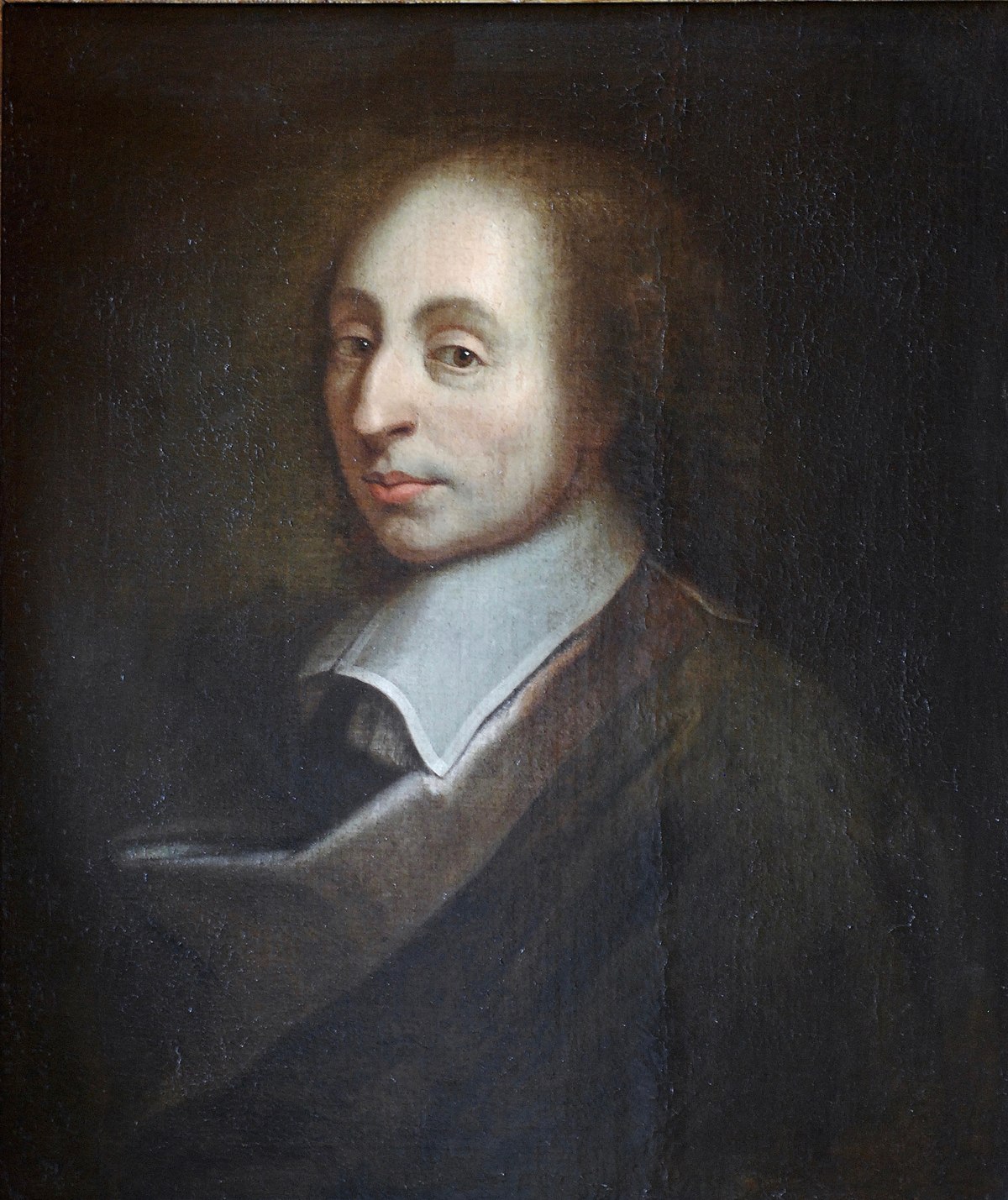
Pascal’s wager - Wikipedia
Wikipedia!@#$%! I forgot the gimmick again!
I'm pretty sure that the Judge wouldn't pay such a slimy hedge bet in the final reckoning.
There's plenty of good evidence for the existence of God and for the nature and purpose of our intended relationship with Him. There is, however, no compulsion to see it. Everyone is quite free to keep their eyes firmly shut wailing that it's all dark! there's nothing to see! or to dive into a fantasy world.