
High Plains Drifter - an allegory for the post-covid world
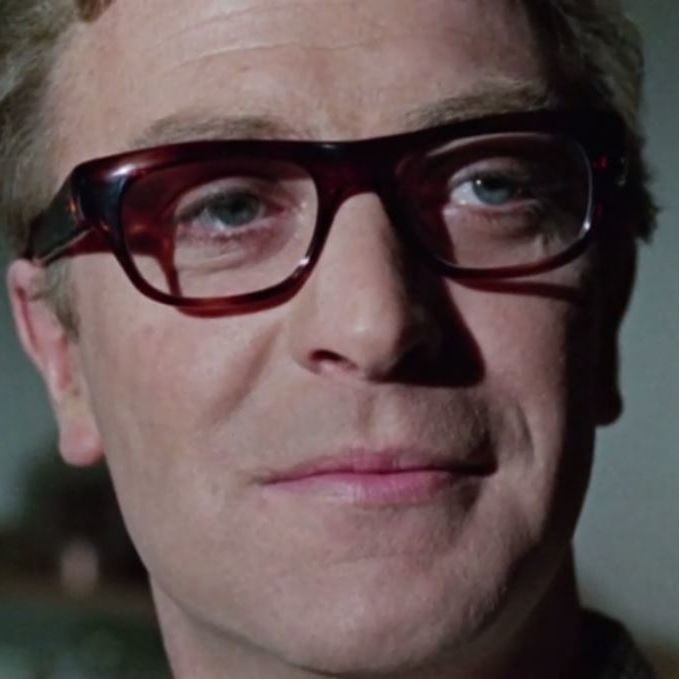
The movie High Plains Drifter was released in 1973. It was the second movie that Clint Eastwood directed. At first this looks like a typical western, featuring a gun slinger who rides into a small town and helps them defend themselves against some bad guys. Beneath that thin veneer, the movie contains a surreal allegory about what happens to the morality of a society when degenerates assume positions of power, commit foul crimes and then blackmail the fearful population into a state of collusion.
You could argue that the movie portrays a type of dystopia which has many similarities to the world of today.
SPOILER ALERT - read the following after watching the movie if spoilers bother you.
The town is run by a cabal of ruthless business men who brutally murdered a marshall who was going to turn them in for running an illegal mining operation. The townspeople all became accessories to the murder as they looked on while the law man was whipped to death by paid thugs. The hired thugs then become a problem, and new thugs have to be hired to protect the town from them. Everybody in town is complicit, and they are all terribly afraid of getting caught for their part in the gruesome killing, but they have compartmentalised this culpability, and pretend to themselves that they are fine upstanding people.
As we watch the movie the fate of the murdered marshall is revealed in a series of flashbacks which are not fully explained until near the end. We are aware that a man was whipped to death in the middle of the town while people looked on, but we don't know why.
One day a drifter rides into town and gets into a fight with the thugs who are currently "protecting" the town. He ends up shooting them all dead. The drifter is contemptuous of everyone in the town and has his way with a woman. He refuses to tell anyone his name or where he is from. The townspeople are shocked, but also relieved because they were getting scared of the new thugs they had hired to protect themselves from the old thugs. Everyone is scared of him except for a midget who follows him around everywhere and wants to be his buddy. The sherrif asks the drifter if he will stay and help defend the town, because they are still under threat from the old thugs they had hired who will be returning soon. As an inducement, the sherrif says the drifter can "have anything he wants". The drifter accepts the offer and promptly appoints the midget as sherrif and mayor.
The drifter helps himself to a variety of goods from the general store and orders drinks for the house in the bar. He gives away blankets to Indians. He commandeers the best room in the local hotel and thows out all the current guests. The business men who run the town decide they will have him killed. He outsmarts them and blows up the hotel with dynamite as they sneak in to assassinate him.
The townspeople are too scared to do anything and allow him to continue to run the town with the midget as sherrif. He then orders them to "paint the town red" - literally, with hundreds of gallons of red paint, and lay out a feast for the thugs who are soon to return. These actions are never explained, but the cowed populace complies with his demands.
The reason why I find all this so interesting and analogous to the present day is that the people in the town are utterly cowed and made compliant by their own fear. It is not however a simple fear of being attacked, it is a fear which is tinged with guilt, because they know they are all complicit in murder. Thus, they are afraid of something more like retribution which they sense is coming to them. This makes them willing to condone more acts of barbarity in a vicious circle which ends up tearing their world apart.
The truth of the movie is that the drifter himself is the retribution, and it slowly becomes evident that he is deeply connected with the slain marshall. We never learn the exact relationship - he may be a vengeful relative, or perhaps not even human. Perhaps he is the ghost of the dead man. His mission is to punish all the townspeople who colluded in the crimes and make them repent of their sins.
In the end the drifter kills the thugs who return to down in powerful symbolic ways. One of them is whipped to death like the marshall and another is hanged with a whip around his throat.
At the end of the movie, as he is riding into the sunset, the midget says "I never did catch your name". The drifter simply replies, "you know who I am".
There is some deep psychology in this movie which gives insight into conformity and the behaviour of crowds. When we see crowds acting in a way that condones persecution and abuse, the key thing to recognise is that these people are paralysed by all-encompassing fear. The fear destroys both their critical mind and their moral compass. Such people will collaborate in crimes against humanity, while still believing themselves to be good people, and believing that what they are doing is for the "greater good". The fear which grips the compliant masses is also tinged with guilt. The more they comply the more guilty and complicit they become in the larger crimes. This, ironically, has a positive feedback effect which increases their capacity for evil, as it requires them to repress consciousness of what they are doing in order to preserve the "I'm a good person" meme.
The resolution provided in the movie is more mythical than dramatic, since the mysterious rider may well be a vengeful spirit. Unfortunately, none of this provides guidance in the current real world turmoil.
In my opinion, High Plains Drifter is an insightful and original work of art which belies its B-grade appearance. It has qualities which have all but disappeared in the Netflix era where film scripts have little subtlety or depth. You may feel I have stretched the analogies a little too far in this rather odd film review. I will plead guilty to that charge, but I still feel there is something to ponder in what I've written.
Spoiler alert also:
Having now watched it, I can say I enjoyed it and can see where you're coming from. The impression I was left with was more to do with what can happen to a town and it's people if the people are cowards.
Yes, the people stood by and were complicit in the murder of the Marshall because the Marshall found them to be guilty of a crime, however not owning up to your crimes/sins and facing the consequences can also be seen as cowardly. But the main theme across the course of the film seemed to be regarding the plethora of nasty things which happened and continued to happen to the people, who were too afraid to stand up for themselves.
The most impressionable quote for me was when the Drifter said
"It's what people know about themselves inside, which makes them afraid".
My initial reaction to this was that people who inside know they are cowards, is what makes them afraid. Though having now read your review, I suppose it could also be suggested that people who inside know they are guilty, is what makes them afraid - maybe afraid of God's judgement or just simply the retribution that may come as a result?
I think that knowing inside you are guilty and a coward also makes you more prone to project evil on others. This is partly because the whole thing works on an unconscious or subconsious level.
If you ever get a chance to read a bit of Karl Jung you will see where I'm coming from. Jung believed that we project our own qualities onto other people. This can be either positive or negative. When people scapegoat others and spew hatred at them, there is something deeper going on inside them - they are running away from something, and their unconsious mind projects that onto others like a cinema projector, but the image is distorted and they never really see clearly because the whole mechanism is designed to prevent their gross failing from becoming conscious, which would cause intolerable guilt.
Yeah, I get what you mean.
The same as the "rose coloured glasses" effect. What you believe a scenario to be is partly based on... well, what your pre-existing beliefs are.
So if you are someone who has experienced being lied to in the past (or you're a liar yourself), there is a degree of assumption that whoever you are talking to is lying, regardless of whether they are or not.
If you are scared of spiders and you've just seen a big spider or was told a story about a scary spider situation, then suddenly you start feeling things touching you and a slight gust of wind or brush of someones clothing, etc. makes you instantly think it might be a spider, 100% based on your belief.
If you have been programmed to believe you are going to "catch" a cold when around someone else with a cold, then your brain/biology will correct itself to make your perceived reality match reality and it does this by giving you what you unknowingly wish for.
I also think this is where 'contagion' actually derives from, at a cellular/bio-magnetic level. The whole idea of frequencies, etc. effecting our biology is basically proven. So this is why people use crystals for protection (and also why the original radios used crystals since they emit frequencies). When we think of this in terms of walking into a room which has a "bad vibe" - that "bad vibe" must effect us unless we have been trained to resist it or absorb and cast away. Given the brain and heart emit frequencies, it would not surprise me if someone who is sick with dis-ease is letting off unhealthful frequencies, which in turn impact those around them and potentially cause them to have dis-ease as well. But it doesn't affect everyone because some people are less sensitive to the "bad vibes" than others, and that's why trying to prove germs cause dis-ease just doesn't work the way virologists would like it to... That's my current train of thought anyway.
But yes, that's a little off track to projecting your thoughts/beliefs onto others and seeing in them what you want or need to see, regardless of reality.
And then I got sent this today, which talks at the start specifically about beliefs and how they change how we see the world:

COVID Inquiry 2.0 – 24 – Carla Mardell
The COVID Inquiry 2.0 is a cross-party, non-parliamentary inquiry held on the 17th August 2022. The COVID Inquiry 2.0 followed COVID Under Question to interrogate breaches of the doctor-patient relati
RumbleWoohoo! New Releases on Netflix - I just noticed it! About to start watching :)
I've been keen to watch Westerns for the first time in my life, knowing now what I know about law of the land, contract law, etc.
Sadly, between Netflix, Stan and Disney + there is very little old style ones to see. I've seen the original Magnificent Seven, Silverado and I think one more. But now I really want to watch this Drifter film as well.
In the end it was a tale of redemption...
True, although there was a hell of alot of retribution first. The midget redeems the town at the end by putting the name of the murdered man on his grave.