
The brick balloon

The Australian Snowy 2 hydro scheme plans to use electricity to pump water up hill to get some of that energy back by running the water downhill again.
Article by Viv Forbes
Some Australian mining companies are planning a dry version of Snowy 2 - a huge brick-powered battery using the force of gravity to drive a generator when solar and wind energy are on strike.
Each unit of this brick-powered battery would comprise a 30 storey tower enclosing a 35 tonne brick which is hauled up using surplus renewable energy (around noon on any clear windy day) and then released to turn generators when there is no renewable energy being produced (every still night or calm cloudy day).
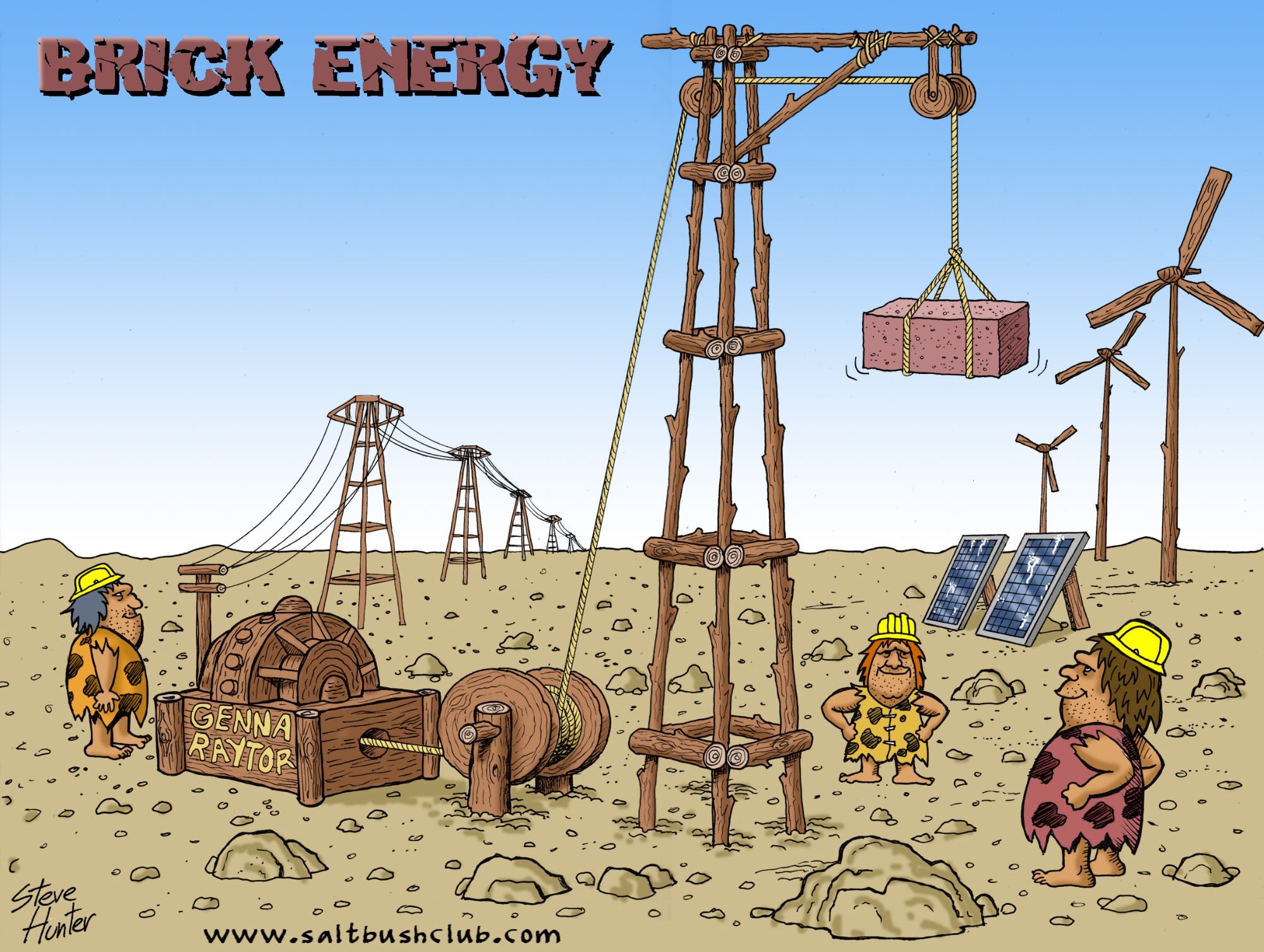
These dopey miners will also have to replace all diesel mining equipment with electric machines, then build enough wind/solar generators to not only run the mine, but also to elevate the giant bricks. The country for miles around will be plastered by solar panels, wind turbines, power lines and roads. They must then build the brick-powered generators. This expensive conglomeration would be lucky to recover 50% of the energy used to create and charge it. Few mines could afford to fund all this. Shareholders can expect nothing except dividends of used bricks, but someone will benefit from increased demand for copper and other metals.
(Prudent mine workers should demand a diesel generator and fuel in every ventilated crib room.)
It would be better and quicker to buy a portable nuclear power plant and get smoke-free 24/7 power.
Viv Forbes has tertiary qualifications in Applied Science and Financial Analysis, and long experience in mine economics, management and financing.

On the positive side, if we shut down all coal and other "dirty" energy sources, maybe there won't be enough electricity to power 5G and it's future incarnations...
I think that Viv Forbes is being a bit optimistic expecting a 50% return of energy expended to charge the "mechanical battery". This, quite apart from the fact that in the expected life of solar and wind "farms" (about 25 years) they will not have produced the power that it took to build, install and maintain them, not even counting the cost of disposal of the old units which contain parts and materials that are not recyclable or destructible with currently available technology.
