The CNRT Statement of 21 July 1998
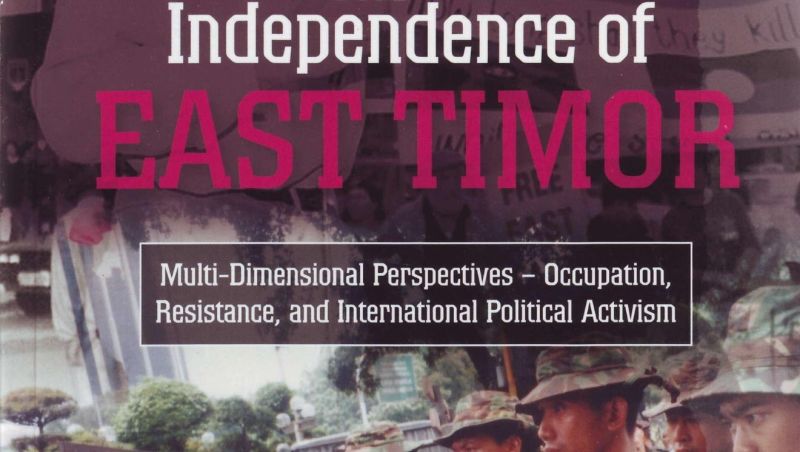
Hero image: screenshot of a portion of front book cover:-
The Independence of EAST TIMOR - Multi-Dimensional Perspectives - Occupation, Resistance, and International Political Activism by CLINTON FERNANDEZ
ISBN 978-1-84519-491-8
SUSSEX ACADEMIC PRESS
Brighton • Portland • Toronto
www.sussex-academic.com
From the Author's Wikipedia entry:
Clinton Fernandes (born 1971) is an Australian historian and academic who is professor of international and political studies at the University of New South Wales in Canberra, Australia, part of the Australian Defence Force Academy. His work is primarily concerned with Australia’s national security, in particular intelligence matters and Australia's relations with its Southeast Asian neighbours. Fernandes completed his thesis at Deakin University in 2004, entitled A Transformational Analysis of the National Interest, which argued that the Australian Government was forced by public outrage to support the Independence of East Timor.
Footnote: Fernandes has shown by his analysis of the 20-year Indonesian military occupation of East Timor, that domestic political outrage & activism can have a significant impact on government foreign policy. We can apply this thesis to the current military occupation of Gaza. At what point in the genocide and opposition from the left in Australian politics will the Australian government change it's policy towards Israel?
Copied below is a 6-page excerpt from Clinton's book (published May 2011). This section deals with the fracturing the Australian bipartisan consensus in 1998. It covers the behind-the-scene moves by activists to overcome the Timor Gap Treaty (done by Australia with Indonesia in 1989) as an obstacle to independence for East Timor. This book is a definitive history of the politics in Australia and abroad that led to the restoration of independence for East Timor in 2002. It is written in the fact-filled & footnoted style if an insider, being an ex-Australian army intelligence officer and now lecturer at the Australian Defence Force Academy in Canberra.
Copyright: Attribution Non-Commercial (BY-NC)
---
174 FRACTURING THE BIPARTISAN CONSENSUS
The CNRT Statement of 21 July 1998
Brereton's efforts were greatly strengthened at this time by the National Council of Timorese Resistance (CNRT), which issued a statement on 21 July 1998 to coincide with the first production of oil from the Elang-Kakatua field in the Timor Gap by joint venture partners BHP, Santos, Petroz and Inpex Sahul. The timing of this media release, one day after BHP had issued its own press release on this milestone event, took the Australian government by surprise. Its professional language demonstrated to both the government and the Opposition that the East Timorese resistance were well-informed about the commercial and legal realities of petroleum exploration and international commerce.
The statement moved beyond moralizing, reassuring the Australian government and the oil companies that 'their commercial interests will not be adversely affected by East Timorese self-determination.' It supported 'the rights of the existing Timor Gap contractors and those of the Australian Government to jointly develop East Timor's offshore oil reserves in cooperation with the people of East Timor.' It warned them that 'with the demise of the Suharto regime and the collapse of the Indonesian economy, the previous political balance has changed.' Accordingly, if 'oil companies [wished] to operate in a secure and predictable environment, for the benefit of all stake-llolders; they would need to 'review their past assumptions and face current realities' (38)
The CNRT statement, which was signed by Jose Ramos-Horta, Mari Alkatiri and Joao Carrascalao, owed its existence to the work of an Australian petroleum engineer named Geoffrey McKee (39)
McKee had been a staff engineering advisor to one of the Timor Gap joint venture partners. He saw that stories about the Timor Gap Treaty and the associated oil production were not in the political pages of the newspapers but in the business pages. He contemplated how he could use his professional expertise and his specific knowledge of Timor Gap operations to move the stories from the business pages to the front pages. He emailed a long post to the mailing list of the East Timor Action Network. The post, entitled Applying Realpolitik to the Oil Issue, argued that it was pointless to use moral arguments that had no effect on governments. According to McKee, 'the Timor Gap Treaty was regarded as the most significant bilateral agreement between Australia and Indonesia in the past forty years. There's no way in the world Australia would even contemplate independence for East Timor if it meant the negation of 20 years of diplomatic work to build the arrangements for petroleum exploration.' McKee argued that if the goal was independence, 'you can't get there by saying you're going to tear up the Timor Gap Treaty.' (4)
He suggested that steps be taken to reassure the Timor Gap joint venture companies that their shareholders' interests would not be threatened in the event of independence. In follow-up online discussions, McKee showed that the oil companies were not 'robbing the East Timorese,' as many activists alleged. Rather, they were 'fairly neutral players' who wanted 'legal and fiscal certainty to underpin their activities' in the Timor Gap. He acknowledged that the oil companies were 'aiding and abetting' the theft of EastTimor's resources, but wrote that 'the key to understanding the issue is to understand the fiscal arrangements.' If East Timor, rather than Indonesia, were a party to the Treaty with Australia, then 'Indonesia's "war booty" would revert to its rightful owners, the East Timorese people, and the production entitlements of the oil companies and the Australian government would remain essentially unchanged.' (41)
His post caused significant chatter on the ETAN mailing list. McKee was then contacted by Australian activists Neil Sullivan (42) and Dr Andrew McNaughtan (43). McKee and McNaughtan met and 'talked all night about East Timor.' (44). Sullivan conceived the idea of a 'Timor Gap policy research committee' to further explore McKee's ideas. The idea was quickly seized upon and implemented. Juan Federer, Andrew McNaughtan and Geoffrey McKee set up the Timor Gap Advisory Committee on 30 December 1997. Later, from his cell in Cipinang Prison, Xanana Gusmao wrote to McNaughtan saying he had 'received the report of [their] activities from our great friend Juan. . . I hope we can do something to impede the free exploitation of our oil and gas. I do really support the idea. I'm waiting for more ideas and news from you.' (45). Juan Federer decided to use McKee's 30 years' experience in the oil and gas industry. They met and communicated at length, with McKee conducting extensive research into the legal, financial and engineering aspects of the Elang-Kakatua oil and the Bayu-Undan gas condensate discoveries. The political challenge was how to do this while not antagonizing the oil companies, who had considerable power at their disposal.
McKee came across a 1995 talk by international law expert Professor Ivan Shearer, who had concluded by saying, almost as a throw-away line: 'Even if East Timor should obtain complete independence, it is by no means improbable that the new state would choose to step into Indonesia's shoes in relation to the Treaty.' (46). McKee realized that 'stepping into Indonesia's shoes' would be the best formulation to show how an independent East Timor would be financially viable without attracting the hostility of powerful corporations. Once that goal had been achieved, it would be possible to 'move the goalposts' incrementally to achieve more advances further down the track.
Members of the policy research committee met BHP on 14 July 1998. They soon concluded that the executives 'were totally afraid about discussing East Timor' with them (47). They realized that a statement about the oil had to come from the leaders of the East Timorese resistance, not from directors of the oil companies they hoped to influence. McKee and Federer drafted the CNRT press release and then it was signed by Ramos-Horta, Alkatiri and Carrascalao on behalf of the CNRT. The die had been cast. McNaughtan then flew to Dili, East Timor - then under military occupation - as a tourist. After meetings with students and other members of the clandestine resistance, he had an 'accidental' meeting at the Hotel Tourismo in Dili with Peter Cockcroft, BHP's senior petroleum representative in Indonesia. Cockcroft had been visiting Dili every month for the previous two years (48). The meeting was arranged by an intermediary, Lansell Taudevin, who was managing a water project in Dili funded by Australia's overseas aid agency. Taudevin had been discreetly corresponding with McKee for the past year. Cockcroft accepted McNaughtan's suggestion that he should meet Xanana Gusmao in prison.
The meeting took place after Juan Federer, who had travelled to Jakarta to facilitate the possible meeting, had arranged for the Cipinang Prison guards to be paid the necessary bribes. Cockcroft met Xanana Gusmao in the presence of Federer and Kirsty Sword, who would later marry Gusmao. Cockcroft was unable to speak Portuguese, in which Gusmao was fluent, and Gusmao could not communicate adequately in English and declined to speak Indonesian, in which Cockcroft was fluent. Federer, who was fluent in English, Portuguese and Indonesian (and other languages as well), acted as interpreter. Gusmao gave Cockcroft a prepared letter, assuring him that 'an independent EastTimor would honour — during an interim period — the rights awarded to mining companies under the 1989 Timor Gap Treaty.' (49).
A high-profile East Timorese leader with considerable media skills then leaked the news of the secret meeting to journalist David Jenkins of the Sydney Morning Herald. The result was a sensational story entitled BHP Talks to jailed Guerrilla Leader (50). Jenkins reported Gusmao's assurances to Cockcroft (51). The Indonesian government was infuriated, and threatened to expel Cockcroft from Indonesia. BHP claimed that the meeting 'had not been sanctioned by BHP', that it was only 'an informal discussion' with Gusmao, whom he 'happened to encounter in the course of a private visit' to the prison. It claimed that BHP's 'community support activities' were discussed, not petroleum rights (52). The organizers of the secret meeting, who had assured Cockcroft of confidentiality, were thoroughly embarrassed, and offered their sincere apologies to Cockcroft. However, the leaker's political judgement proved to be correct; it was an important advance for East Timor's quest for legitimacy. Although BHP withdrew Cockcroft from Indonesia and he suffered disruptions to his career and personal life, his reputation was ultimately enhanced as an astute oil industry operative who had foreseen the winds of political change. He would later work as a special advisor to the government of an independent East Timor.
Brereton's policy advisor, Dr Philip Dorling, took notice of the prison meeting, recognising it as a possible game-changer. He invited McKee to his office in Parliament House in order to better understand the revenue implications of the energy resources in the Timor Gap (53). McKee provided Dorling with detailed information about the Elang-Kakatua and Bayu-Undan projects. He explained the financial projections, and added that Habibie's proposal of `special status' for East Timor opened the door for East Timorese representation on the Timor Gap Joint Authority and Ministerial Council, which had only Indonesian and Australian representatives on it to oversee the exploitation of the oi1 (54). Dorling worked over the 1998 Christmas break to develop a policy based on this information. The result was a new initiative by Brereton in January 1999, urging the Australian government to guarantee that East Timor received a share of the oil revenue from the Timor Sea. Brereton said the Timor Gap Treaty had to be reviewed, and that Indonesia's revenue had to be directed to East Timor:
Clearly any meaningful arrangements for autonomy should allow control by the East Timorese people over their natural resources. This must include Indonesia's share under the current arrangement of the oil and gas reserves of the Timor Gap. The government should convene urgent talks with East Timorese independence leaders over the future of the Timor Gap Treaty between Australia and Indonesia (55).
Brereton and Dorling's calibrated, incremental approach to change were moving the goalposts again.
[end of chapter]
Tributes from back cover of book
"The struggle of East Timor for independence, resisting aggression and slaughter backed by the great powers, is an inspiration for those who value freedom and justice. Fernandes provides an expert and perceptive inquiry into this true modern epic, exploring in unparalleled depth the internal dynamics and international dimensions of the struggle. This most welcome contribution is a worthy tribute to those who endured and overcame, yielding lessons of great significance for understanding of the realities of international society and the resources of the human spirit."
--- Noam Chomsky
"No better account exists of East Timor's long struggle to emerge from Indonesia's occupation, one that long seemed hopeless to the outside world. Fernandes has an admirable grasp of Timorese, Indonesian, Portuguese and other accounts — as much at home in Jakarta's military politics as in the activist networks supporting the Timorese resistance. Riveting detail is crammed into this vivid account of a fight on many fronts.'
-- Hamish McDonald, Asia-Pacific Editor Sydney Morning Herald
"The Independence of East Timor provides the most exhaustive and detailed account to date of the many, varied and creative ways in which the country's internal resistance combined with an international solidarity movement to expose the brutalities of Indonesia's occupation, achieve Indonesia's withdrawal, and create the conditions for East Timor's independence."
John G. Taylor, Professor of Politics, London South Bank University, and author of East Timor: The Price of Freedom
This book is a history of the struggle for independence after East Timor was invaded by Indonesia in 1975. The occupation, which lasted 24 years, was immediately resisted through guerrilla warfare and clandestine resistance. A continuum of effort between the armed freedom fighters in the mountains, the resilience of urban supporters, and international activism and support eventually brought about liberation in September 1999. Given that the Timor rebels did not have a land border with a friendly state, had no external supplier of weapons and no liberated area in which to recover between guerrilla operations, their successful resistance is unique in the history of guerrilla warfare and independence struggles. Equally uncommon was an unexpected weapon in the struggle — a remarkable display of strategic non-violent action.
The Independence of East Timor is the first study to integrate all the major factors in East Timor's independence struggle. The multi-dimensional perspectives addressed in this volume include Indonesian, US and Australian diplomacy; Indonesian military operations and activities against the populace; East Timorese resistance at all social levels; human rights abuses; the issue of oil; and international diplomacy resulting from global solidarity activism.
Cover illustrations: The photo of Andrew McNaughtan was taken in Sydney by Indonesian activist Enrico Aditjondro. The photo of East Timorese student Antonio Sarmento was taken in Jakarta by Australian activist Jude Conway.
Clinton Fernandes is Associate Professor at the University of New South Wales. Prior to becoming an academic, he spent 15 years in the Australian Army and served as the Australian Intelligence Corps' Principal Analyst (East Timor) in the final years of East Timor's independence struggle. In 2008/9 he assisted the Australian Federal Police's War Crimes team on the subject of the Indonesian military and the East Timorese resistance. From 2007 to 2009 he served as the Consulting Historian for Balibo, a feature film about the murder of six Australian-based journalists in East Timor in 1975.
Article by Clinton Fernandez
SECRECY AND EMPIRE - Declassified Australia
21 Oct, '22
https://declassifiedaus.org/2022/10/21/secrecy-and…
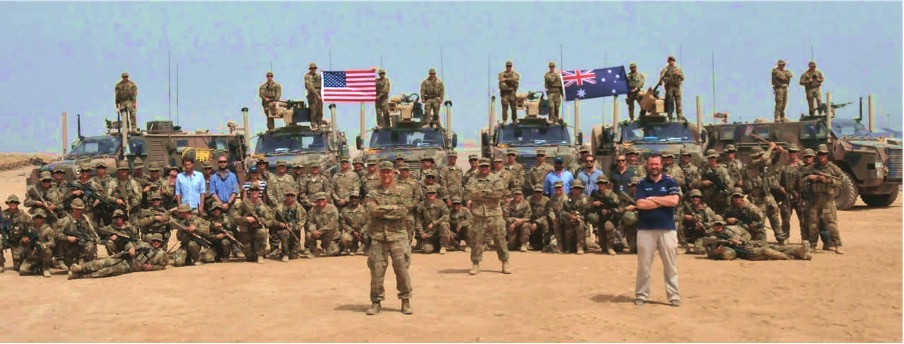
SECRECY AND EMPIRE - Declassified Australia
Under the guise of protecting the national interest, Australia’s security establishment acts in secret to uphold the global US-led imperial order.
Declassified Australia